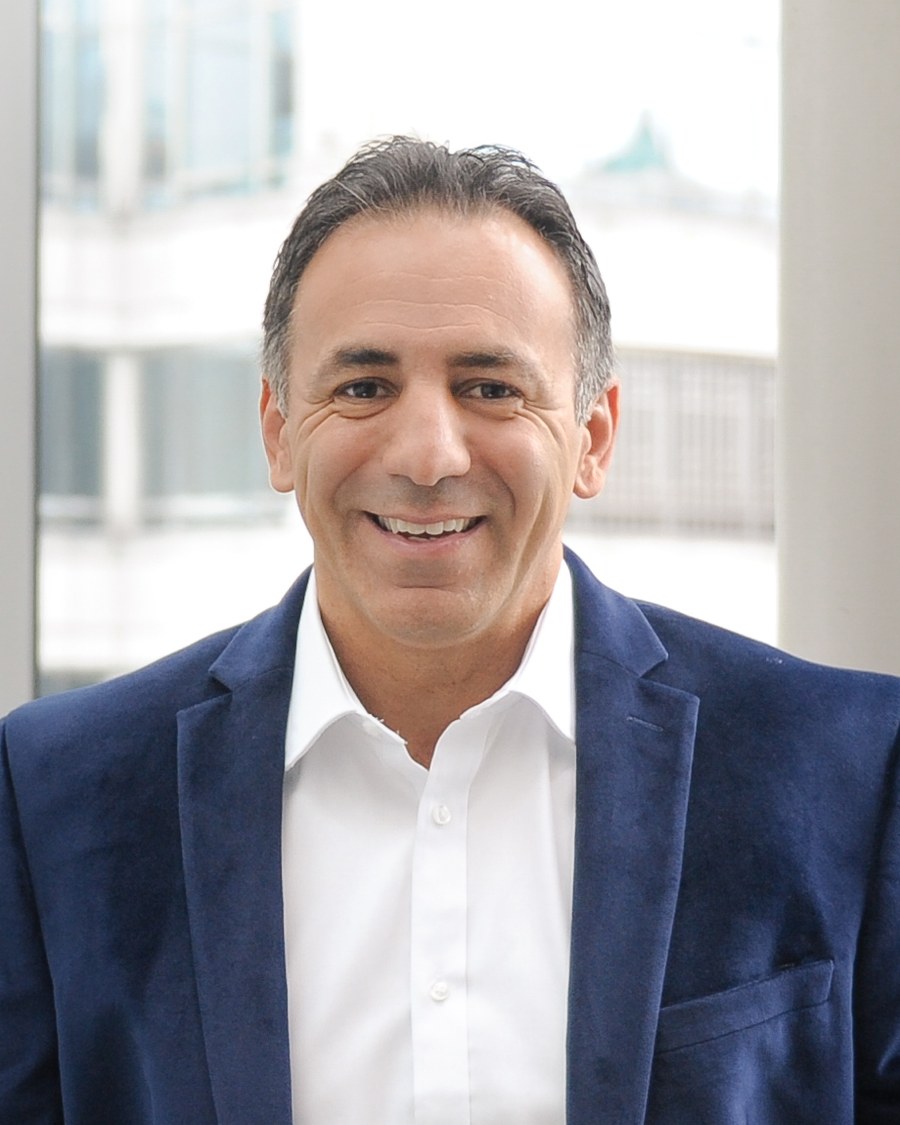
Ara Bayindiryan · Founder
I had been careful with money my whole life. It turns out being careful with money and knowing how to invest it are two completely different skills.
Ara Bayindiryan — Founder, Managing Director and Chief Investment Officer
In my early thirties, three friends and I started a technology company in Chicago. We built it out of almost nothing and we had the time of our lives doing it. We sold it in 2005. Twenty years later the four of us are still close friends, which probably tells you something about how it was built.
Up to that point I had been careful with money my whole working life. I saved. I lived below my means. I kept a spreadsheet where I tracked my net worth every quarter — a close friend of mine still uses that same spreadsheet today.
What I had never done was invest a serious sum. Those are not the same skill at all.
The calls started almost immediately. Brokers, advisors, real estate investors, people with something to sell. Every one of them had a product, and every product sounded sensible while it was being explained to me. So I bought some of them.
Here is the part I own. I had been successful at most things I’d tried in business. I was on a hot streak, and I felt like I couldn’t miss. I should have done more due diligence. I should have stuck with what got me there in the first place — being careful, and asking questions until I actually understood the answer.
Then 2008 arrived. The market fell, and it kept falling for years. Because there was no plan underneath what I owned — nothing sizing the risk to what I could actually afford to lose, nothing saying which money was needed when — there was nothing to cushion it either. A large part of what the sale had produced went with it.
It wasn’t that the products were bad. Most of them were perfectly legitimate things that are right for somebody. The problem was that nothing was deciding which ones were right for me. There was no plan. There were no goals written down that an investment had to serve before it earned a place. Just a run of individually reasonable decisions, made one at a time, in an order set by whoever happened to call that week.
A collection of products has no way of telling you when something no longer belongs in it. A plan does.
The investment world is a very large box of tools. Nearly all of them are legitimate. Very few of them are right for any one person at any one time.
The only way to know which tools are yours is to start with the questions the tools can’t answer. When do you want to stop working? What has to be true for that to happen? What would you not recover from? Which money is for the next three years, and which is for the next thirty?
Answer those first and most of the product questions answer themselves. Answer them last — or never — and you end up where I did: holding a pile of reasonable decisions that don’t add up to anything.
Goals first, and written down, because a goal you haven’t written down is just a mood. Then the plan that serves them. Then — and only then — the question of which tools belong in it.
That order is the whole difference. It is why our first conversation with anyone is usually about their life rather than their portfolio. We are not trying to gather assets, and we are not looking for somewhere to fit a product that already exists. We would rather tell you what we found than what we sell.
What a plan is not. It is not a promise about returns, and no adviser can honestly give you one. Investing involves risk, including the possible loss of principal, and no amount of planning removes that. What a plan does is make decisions answerable to something. When an investment is proposed, there is a standard to hold it against. When markets move, there is a reason to hold or to change that has nothing to do with how the week felt.
I look back on it now as tuition — the cost of learning to do it the right way. Expensive, and honestly, that’s okay. It is the reason the firm is built the way it is.
Four meetings. You will not hear a recommendation from me until the third one, because until then I don’t know enough to give you a sensible one.
Two things worth noticing about that order. Nothing is recommended in the first two meetings, because a recommendation made before the analysis is a guess with a suit on. And the fourth meeting is a decision, not a close — if the honest answer is that you are already well served, that is a perfectly good outcome and I will say so.
Worth saying plainly, because it saves everybody a meeting.
None of that is a criticism — those are all reasonable things to want. They are just not the thing we are set up to do well.
I spent fifteen years in technology and financial services before any of this. I was a co-founder and executive vice president of Katabat Corporation in Chicago, which grew from a single beta customer to serving many of the largest brokerages in the country before we sold it. Earlier I ran international business development at 3Com, and before that product operations at U.S. Robotics, for a division that grew from $355 million to $1.2 billion in revenue.
That background is the reason business owners tend to find their way here. I have sat where they sit — building something, running it, selling it, and then finding out that the day after the sale is a completely different problem from the one you spent a decade solving.
Bayworth Capital is deliberately small. There is no call center and no junior desk you get handed to after the first meeting — the people below are the people you deal with.
I have lived in Illinois for more than fifty years, and on the North Shore for a good stretch of them. My wife Laura and I have been married more than twenty-seven years. We have a son and two daughters.
It is relevant to the work, I think. Most of the people I sit down with are trying to solve the same problem I am — making sure the money supports the life, rather than the other way around.
Everything a registered investment adviser is required to disclose about itself is public, and you can read ours before you ever pick up the phone. Our Form ADV and Form CRS set out how we are paid, what conflicts of interest exist, who owns the firm, and whether there is any disciplinary history.
Look up Bayworth Capital (Xceed Capital Management, LLC), CRD #284360 →
I would rather you checked. It is a strange industry in which almost nobody points clients at this, and it takes about four minutes.
Thirty minutes, no cost and no obligation. Mostly I will ask what you are trying to do and whether what you own is set up to do it.
Bayworth Capital serves clients across the North Shore and greater Chicago.